Wondering if you can get more house, more land, or a little more breathing room without giving up access to Charlottesville? That is exactly why many buyers take a close look at Louisa County. If you are weighing the daily drive against your budget and lifestyle, this guide will help you see where the tradeoffs really are and how to decide if the move makes sense for you. Let’s dive in.
What the Louisa-to-Charlottesville commute looks like
A Louisa County commute to Charlottesville can be doable, but it is not one-size-fits-all. Current Census data shows Louisa County’s mean travel time to work is 35.7 minutes, which gives you a realistic starting point for thinking about a daily drive.
A third-party route estimate puts Louisa to Charlottesville at about 37 minutes and 31 miles under typical traffic. That lines up closely with the countywide commute profile, which suggests many buyers should expect a commute in that general range rather than a quick hop.
Why route choice matters
Your commute will depend a lot on where you live in Louisa County and where you need to go in the Charlottesville area. Louisa County identifies US-15, US-250, US-33, US-522, and US-208 as key primary routes, and I-64 runs along the county’s southern border.
One major connection point is Exit 136 at Zion Crossroads, which links I-64 to US-15. VDOT also notes that U.S. 250 runs parallel to I-64 through the Charlottesville-Albemarle region and connects travelers between I-64 and downtown Charlottesville.
In plain terms, you are not choosing one fixed commute. You are choosing among a few road-based patterns, and each can feel different depending on your schedule and destination.
Rush hour can change the equation
Miles only tell part of the story. The bigger question is how much traffic variability you can tolerate during the week.
VDOT says the U.S. 250 corridor in the Charlottesville area can become a pinch point during peak travel times. VDOT also reports that the Zion Crossroads corridor is seeing population growth along with increasing safety and operational challenges, which means a drive that feels reasonable on paper may feel longer when traffic builds.
If you need to be in Charlottesville at the same time every weekday, especially during the heart of rush hour, that consistency matters. A manageable commute is not always an easy commute.
Why buyers consider Louisa County anyway
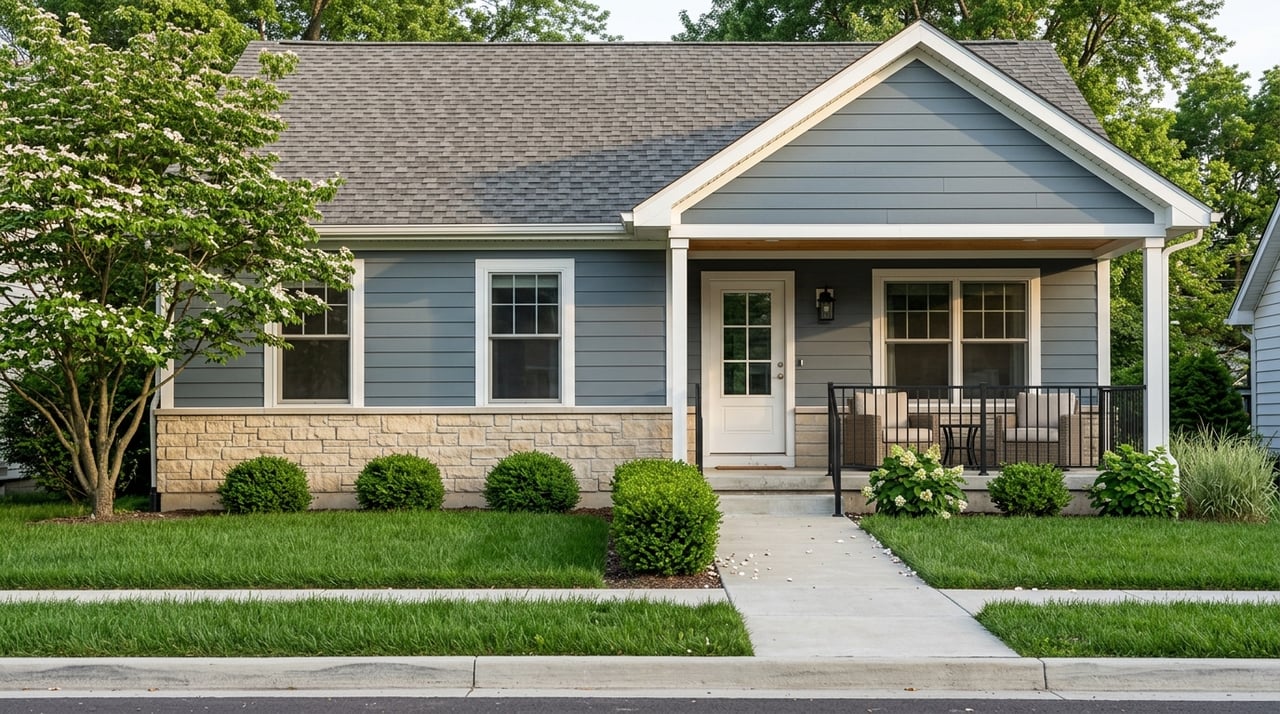
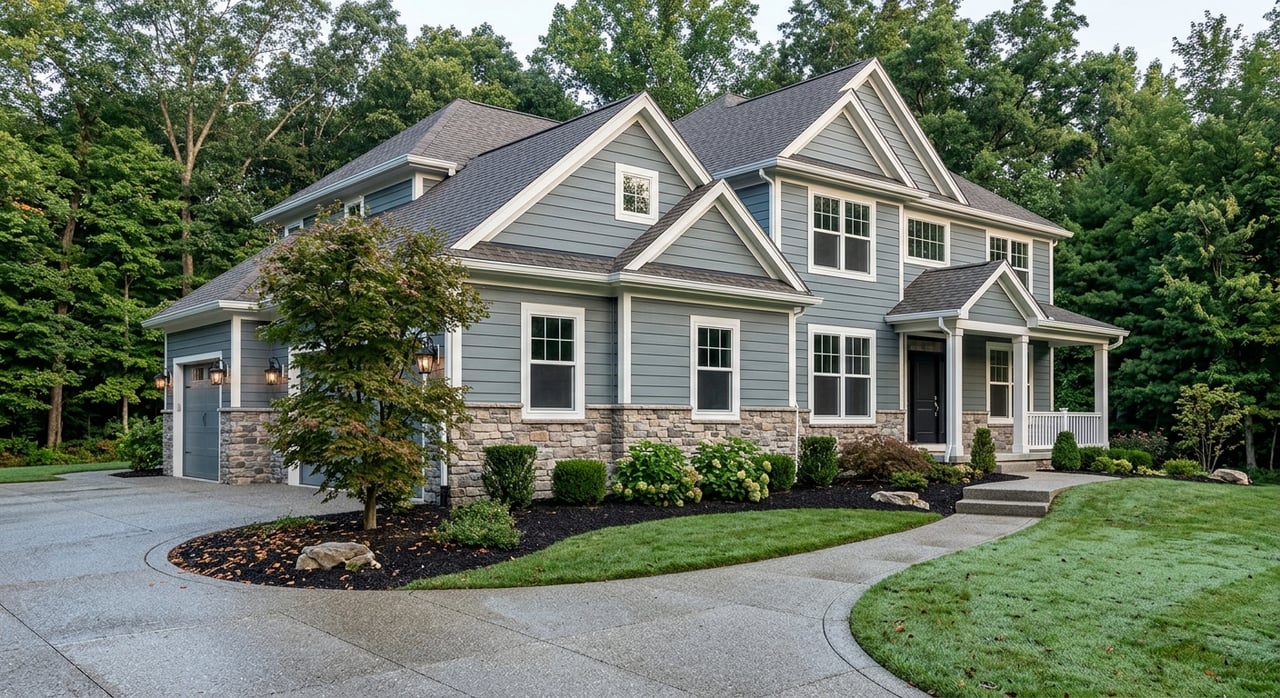
For many buyers, the appeal is simple: more value for your housing dollar. Louisa County’s housing page describes a wide mix of options, from apartments and starter homes to planned communities, lakefront homes on Lake Anna, and more cost-effective choices such as accessory apartments, two-family dwellings, single-family attached dwellings, and manufactured or modular homes in some areas.
The price gap compared with Charlottesville and Albemarle is significant. Census QuickFacts shows Louisa County’s median owner-occupied home value at $315,300, compared with $486,700 in Charlottesville and $495,400 in Albemarle County.
That means Louisa’s median owner value is about $171,400 lower than Charlottesville and $180,100 lower than Albemarle. Median gross rent is also lower in Louisa at $1,220, compared with $1,540 in Charlottesville and $1,692 in Albemarle.
What you may gain by living in Louisa
If your budget feels tight closer to Charlottesville, Louisa County can open up more possibilities. Depending on the area, you may be able to prioritize:
- More square footage
- More land or privacy
- Newer subdivision options
- Lake-oriented living
- Lower housing costs than closer-in markets
Louisa’s overall character supports that tradeoff. The county is 82.2% owner-occupied and has a relatively low population density of 75.9 residents per square mile, which reinforces its rural-exurban feel.
What you give up for that value
The tradeoff is convenience. If the shortest possible drive to Charlottesville is your top priority, closer-in parts of Charlottesville and Albemarle still have the edge.
Louisa can absolutely work, but you should go in with clear expectations. A daily commute of around 30 minutes or more is common, and that may feel very different depending on your work hours, family schedule, and tolerance for time on the road.
Who this commute fits best
In general, a Louisa County to Charlottesville commute tends to fit best if you care more about space and affordability than shaving every possible minute off the drive. It can be especially practical if you work a hybrid schedule or have some flexibility in when you leave home.
Louisa County’s transportation planning notes that many residents commute in multiple directions and that commutes of 30 minutes or more are common. For a buyer heading to Charlottesville every weekday, that means the drive is workable for many people, but it is not a small detail to overlook.
Hybrid and flexible-schedule buyers
If you only drive into Charlottesville a few days a week, Louisa often becomes more attractive. The savings on housing may feel more meaningful when you are not making the trip five days a week during peak periods.
Flexible hours can help too. If you can leave earlier or later than the busiest times, you may avoid some of the pressure points that make the commute feel less predictable.
Buyers who want more home for the money
If your biggest goal is stretching your budget, Louisa deserves a serious look. The gap in median home values alone shows why many buyers are willing to consider a longer drive.
That extra value may translate into a larger home, different property type, or features that are harder to find at the same price closer to Charlottesville.
Buyers who want land, privacy, or lake access
Some buyers are not just shopping for a house. They are shopping for a different pace, more elbow room, or a property style that is less common in more compact areas.
Louisa can make sense if you would gladly trade some commute convenience for acreage, a lower-density setting, or access to areas near Lake Anna.
Zion Crossroads is worth extra attention
If Charlottesville access is high on your list, Zion Crossroads is one of the first places to study. Louisa County describes it as a significant gateway area, and it benefits from immediate access to I-64.
The county also notes that Zion Crossroads has public water and sewer, natural gas, and high-speed internet. For buyers who want an easier commute pattern without giving up Louisa County entirely, that combination can make this area especially appealing.
Louisa is growing, not standing still
It is also important to understand that Louisa is changing. Census data shows the county’s population grew 12.0% from April 1, 2020 to July 1, 2024, and the county recorded 409 building permits in 2024.
That points to an area with ongoing growth and housing activity, not a static market. For buyers, that can mean more choices in some segments, but also continued competition and evolving traffic patterns over time.
Questions to ask before you commit
Before you decide that a Louisa County commute is right for you, ask yourself a few honest questions:
- Which part of Louisa gives you the best balance of price and drive time?
- How much rush-hour variability can you comfortably handle?
- Do you want acreage, lake access, or neighborhood amenities more than walkability?
- Would focusing near Zion Crossroads give you a better fit than looking farther east in the county?
- How often will you actually need to be in Charlottesville each week?
These questions matter because the right answer is personal. Two buyers with the same budget can land in very different places depending on how they value time, space, and daily routine.
So, is the commute right for you?
If affordability and space matter more to you than being as close as possible to Charlottesville, Louisa County may be a strong fit. The commute is realistic for many households, especially if you have a hybrid schedule, flexible hours, or a strong reason to prioritize a different home style or price point.
If convenience is your top priority and you want the shortest, simplest trip possible every day, you may be happier focusing closer to Charlottesville or Albemarle despite the higher housing costs. The best move is the one that fits your real life, not just your map search.
If you want help comparing Louisa County with Charlottesville-area options, Patricia Irby would love to connect over coffee and help you build a search around your budget, commute, and goals.
FAQs
How long is the commute from Louisa County to Charlottesville?
- A reasonable baseline is about 35 to 37 minutes, with Louisa County’s mean travel time to work at 35.7 minutes and one route estimate at roughly 37 minutes and 31 miles under typical traffic.
Is Zion Crossroads a good area for a Charlottesville commute?
- Zion Crossroads is often one of the most commute-friendly parts of Louisa County because it sits near I-64 access and has utilities such as public water, sewer, natural gas, and high-speed internet.
Are homes in Louisa County cheaper than Charlottesville homes?
- Based on Census QuickFacts, Louisa County’s median owner-occupied home value is lower than both Charlottesville and Albemarle County, which is one reason buyers consider the tradeoff.
Who is a Louisa County to Charlottesville commute best for?
- It often works best for buyers who value affordability, space, privacy, or flexible schedules more than the shortest possible daily drive.
Is Louisa County growing?
- Yes. Census data shows Louisa County’s population increased 12.0% from 2020 to 2024, and the county recorded 409 building permits in 2024.
What should you weigh before moving to Louisa County for a Charlottesville job?
- Focus on your likely route, your tolerance for rush-hour delays, how often you need to commute, and whether the housing savings and lifestyle benefits outweigh the extra drive time.