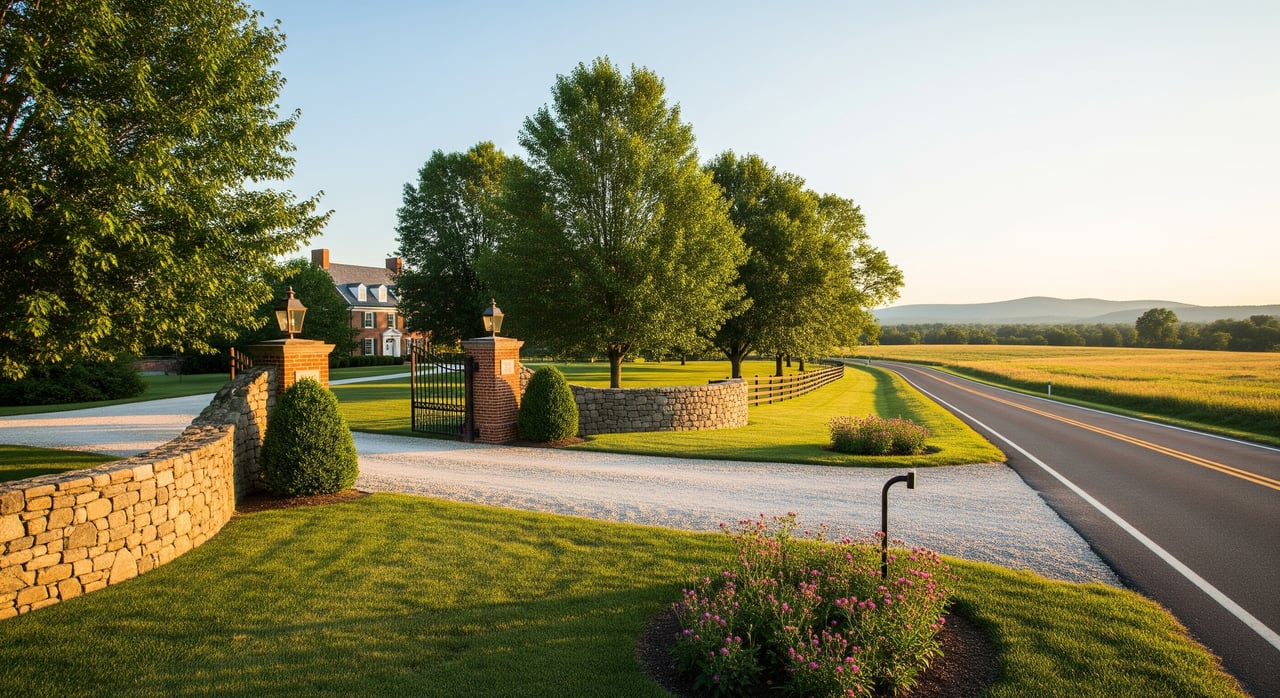
Is the quiet country lane to your future home public or private? In Louisa County near Gordonsville, that answer shapes everything from snow removal to financing. If you want fewer surprises after closing, understanding who maintains your road is a smart first step. In this guide, you’ll learn how to verify road status, what it means for maintenance, permits, emergency access and loans, and how to set up a fair private road agreement. Let’s dive in.
Public vs private roads in Louisa
In Virginia, the Virginia Department of Transportation (VDOT) maintains the statewide public road system that includes primary and secondary state highways. To be VDOT maintained, a road must meet VDOT standards and be formally accepted into the system. If that has not happened, the road is private and landowners are responsible for upkeep.
Louisa County agencies manage land records, plats, subdivision approvals, permits, and addressing. County rules can set width, turnaround, and drainage standards that apply whether a road is public or private. State law under Title 33.2 governs public highways and VDOT’s authority, while local ordinances guide private road creation in land development.
How to tell VDOT vs private
Start with visual cues
Look for VDOT signs, mileposts, or a state route number as a preliminary indicator. Signs like “Private Road,” “No Through Traffic,” or gates and bars often signal a private road. Visual cues help, but they are not definitive on their own.
Check county GIS and tax maps
Use Louisa County’s GIS and parcel maps to locate road classifications and rights of way. Look for notations showing public versus private roads, recorded easements, and right‑of‑way widths. The assessor map layers often show easements that support legal access.
Read deeds, plats, and the title report
Review the preliminary title report and your deed for easements, maintenance agreements, and any references to VDOT acceptance. Subdivision or boundary plats may state whether a road was dedicated to public use or remains private, and often include notes on maintenance responsibility.
Search recorded documents at the Clerk
At the Clerk of the Circuit Court, look for covenants, declarations, road maintenance agreements, and access easements. These recorded documents are what buyers, lenders, and title companies rely on.
Ask VDOT for written status
Contact the local VDOT residency office that serves Louisa County and request the maintenance status for the road. Ask for written confirmation stating whether the road is on the state maintenance system. This letter is valuable for title and underwriting.
Confirm dedication and acceptance history
Some roads are dedicated by a developer and later accepted by VDOT. Check county records or plat notes that document dedication and VDOT acceptance. If a plat shows dedication but VDOT has no acceptance record, VDOT is not responsible until acceptance occurs.
Involve your title company and surveyor
Ask your title company and surveyor to confirm legal access, recorded easements, and maintenance agreements. They will flag issues that could affect closing or financing.
Keep your paper trail
Collect and keep:
- Preliminary title report and exceptions
- Recorded deed and recorded plats
- Any recorded road maintenance agreement, covenants, and easements
- Written VDOT maintenance status letter
- County GIS screenshots and any permit approvals
- HOA or road association documents
Why classification matters
Maintenance and repairs
If a road is VDOT maintained, VDOT handles routine maintenance inside the public right of way, including resurfacing, potholes, and snow removal on state secondary roads per VDOT schedules. On private roads, owners or a road association pay for grading, resurfacing, snow removal, and culvert repairs. Budget for regular work and occasional major fixes.
Drainage and culverts
VDOT typically maintains drainage structures that are part of a VDOT road within the public right of way. Drainage crossing private land often remains the owner’s responsibility. On private roads, owners are responsible for design, installation, and maintenance of culverts and ditches. Poor drainage often leads to disputes, so plan for routine upkeep and document responsibilities.
Permits and improvements
Certain work requires permits. If your driveway intersects a VDOT route, you may need a VDOT driveway permit for new or modified access. For private roads, culvert changes or work affecting public drainage or streams may require county or state environmental permits. Coordinate early with county departments.
Emergency access and 911 addressing
Emergency responders and 911 addressing require safe, year‑round access. Louisa County can condition building permits on minimum standards like width, turnouts, and overhead clearance. Even on private roads, you may need improvements to meet access standards.
Insurance and liability
On private roads, liability for accidents or unsafe conditions often falls on landowners or the road association. Many associations carry liability insurance to cover common areas. Review covenants for indemnity provisions and confirm personal coverage.
Financing and title
Most lenders require reliable, all‑season legal access. That typically means frontage on a VDOT‑maintained road or a recorded perpetual easement with an enforceable maintenance agreement. Some loan programs, including government‑backed options, have specific access requirements. If access is based on an informal or unrecorded road, lenders may deny financing or require reserves for improvements.
Resale and disclosure
As a seller, disclose whether the access road is public or private and provide the recorded documents. Buyers should evaluate long‑term costs and whether the agreement funds capital improvements and includes dispute resolution.
Taxes and assessments
Public road frontage does not usually change property tax treatment. In limited cases, local assessment districts may fund road improvements. Check county records if you suspect a special district applies.
Build a strong private road agreement
Choose a governance model
You have a few options:
- Informal cost sharing: easy but weak and hard to enforce
- Recorded maintenance agreement or covenant: best practice for clarity and enforcement
- Road association or HOA: collects dues and maintains the road and drainage
- Special service district: rare in rural settings and subject to local law
Must‑have agreement terms
A clear, recorded agreement should include:
- Parties and parcels: legal descriptions and owner names
- Scope of maintenance: grading, potholes, snow removal, vegetation, drainage, culverts, resurfacing, capital improvements
- Standards of maintenance: minimum width, surface type, and drainage standards
- Cost sharing: equal shares, frontage, lot size, or usage based; include late‑payment rules
- Reserve fund: annual contributions, banking, accounting, and audit rights
- Governance: management committee, voting weights, meeting and quorum rules
- Emergency repairs: authority and temporary funding methods
- Assessment and enforcement: collection methods, liens, and recovery of costs
- Easements and access: perpetual ingress and egress; right to enter for road work
- Insurance and indemnity: coverage requirements and allocation of risk
- Repair thresholds: who approves small repairs versus major projects
- Dispute resolution: mediation or arbitration before litigation
- Duration and amendments: term length, vote thresholds, and recordation
- Successors: binding on future owners
Recording and enforcement
Record the agreement with the Louisa County Clerk of the Circuit Court so future buyers are on notice. Ensure deeds reference it and title commitments list it properly. Consider having new owners execute a joinder to close any chain‑of‑title gaps.
Typical cost approaches
- Small shared lanes: equal annual dues for routine grading and culvert work, plus a special assessment for resurfacing every 7 to 15 years
- Larger subdivisions: recurring dues for routine maintenance and reserves for capital projects, with special assessments for major paving
Tips to avoid conflict
- Fund a modest reserve at closing and prorate the seller’s share
- Keep simple, transparent records of expenses and decisions
- Define measurable standards, such as compacted surface width
- Establish clear approval and cost allocation steps for major upgrades
Buyer and seller checklists
For buyers
- Ask whether the road is VDOT maintained and request documentation
- Obtain the title report; review easements and maintenance agreements
- Pull county GIS maps and recorded plats from the Clerk
- Contact the local VDOT residency office and request written maintenance status and any driveway permit info
- Confirm lender requirements for access; get a list of required documents
- Inspect road and drainage; get repair or resurfacing estimates if needed
- Verify emergency vehicle access and addressing with county standards
- Review HOA or road association dues, reserves, and past assessments
For sellers
- Gather recorded agreements, plats, VDOT correspondence, and maintenance records
- If agreements are informal, record a written maintenance agreement before closing if possible
- Confirm driveway permits and addressing in county records
Get the right help
- Real estate attorney for easements and road agreements
- Licensed surveyor for right‑of‑way and plats
- Title company to identify exceptions and coordinate lender needs
Local contacts and next steps
Your best sources for confirmation include:
- VDOT for maintenance status letters, driveway permits, and acceptance policies
- Louisa County Planning and Zoning for subdivision and access requirements
- Louisa County Building and Inspections for driveway and building permit standards
- Louisa County GIS and Commissioner of the Revenue for parcel mapping and right‑of‑way info
- Clerk of the Circuit Court for recorded deeds, plats, covenants, and agreements
- Local professionals: title company, real estate attorney, surveyor, and the VDOT residency engineer
Ready for local guidance?
If you are weighing a property on a private lane near Gordonsville or anywhere in Louisa County, you do not have to navigate these steps alone. I help buyers and sellers assemble the right documents, coordinate with VDOT and the county, and keep lenders comfortable with access and maintenance. With negotiation expertise and relocation experience, I will help you move forward with confidence. Let’s connect over coffee — schedule a free consultation with Patricia Irby.
FAQs
What does VDOT maintenance include in Louisa County?
- VDOT typically handles routine upkeep within the public right of way on accepted roads, including resurfacing, pothole repair, shoulder work, drainage tied to the road, and snow removal on secondary routes per VDOT schedules.
How can I verify a road’s status before making an offer?
- Review deeds, plats, and the title report, check Louisa County GIS, search the Clerk’s records for easements and agreements, and request a written maintenance status letter from the local VDOT residency office.
Can VDOT take over a private road later?
- Yes, but only after the road meets VDOT standards and VDOT formally accepts it. Developer dedication alone does not make VDOT responsible without acceptance.
Will lenders finance a home on a private road?
- Often yes, if there is a recorded perpetual access easement and an enforceable maintenance agreement. Some programs require stronger documentation, so confirm requirements with your lender early.
Who pays for snow removal on a private road?
- The owners who use the road, typically through a road association or a recorded maintenance agreement that spells out cost sharing and response expectations.
Do I need a driveway permit if I connect to a state route?
- Usually yes. If your driveway intersects a VDOT roadway, you may need a VDOT driveway permit for new access or modifications. Coordinate with VDOT and the county in advance.